
IDEA INSIGHT 💡
Start With the Outcome,
Not the Agenda
Why leadership development needs clarity before content


In the first article of this series, we explored why so many leadership development programs struggle to create lasting impact. The common issue wasn’t lack of effort or commitment — it was lack of design clarity.
That lack of clarity shows up most often at the very beginning.
Before a single workshop is scheduled or a single topic is selected, effective leadership development depends on answering one foundational question:
What does success actually look like?
When that question isn’t answered clearly, and shared consistently, leadership programs tend to drift. They become well-intentioned, but busy, complex, and difficult to connect to real change.
The Cost of Unclear Success
Many leadership programs begin with a long list of ideas:
- Topics leaders should know
- Skills leaders should build
- Experiences leaders should have
It is fun to dream up the “agenda” for the leadership program. What’s often missing is a clear definition of why the program exists and what must be different because it does.
Without that clarity:
- Different stakeholders hold different expectations
- Design decisions become reactive and clumsy
- Measurement becomes vague or symbolic
The result is activity without impact.
To make these design steps more concrete, we’ll follow a fictional organization — BridgePoint Community Services — to illustrate what this process can look like in practice.
A Familiar Situation: BridgePoint Community Services
BridgePoint Community Services is a mid-sized nonprofit delivering community-based programs across several regions. Over the past few years, the organization has grown steadily — expanding services, adding staff, and operating in increasingly complex environments.
With that growth came leadership transitions.
Several long-tenured leaders retired or stepped back, and many new managers were promoted from within. These individuals were deeply committed to the mission and highly capable in their program roles. What they lacked was preparation for people leadership.
They were now supervising former peers, navigating conflict, managing competing priorities, and making decisions with broader organizational impact.
As BridgePoint’s board and CEO reflected on what they were seeing, one realization emerged:
“We didn’t promote the wrong people. We just haven’t prepared them for leadership.”
Rather than questioning their talent decisions, BridgePoint decided to design a leadership development program — one intentionally built for new people leaders.
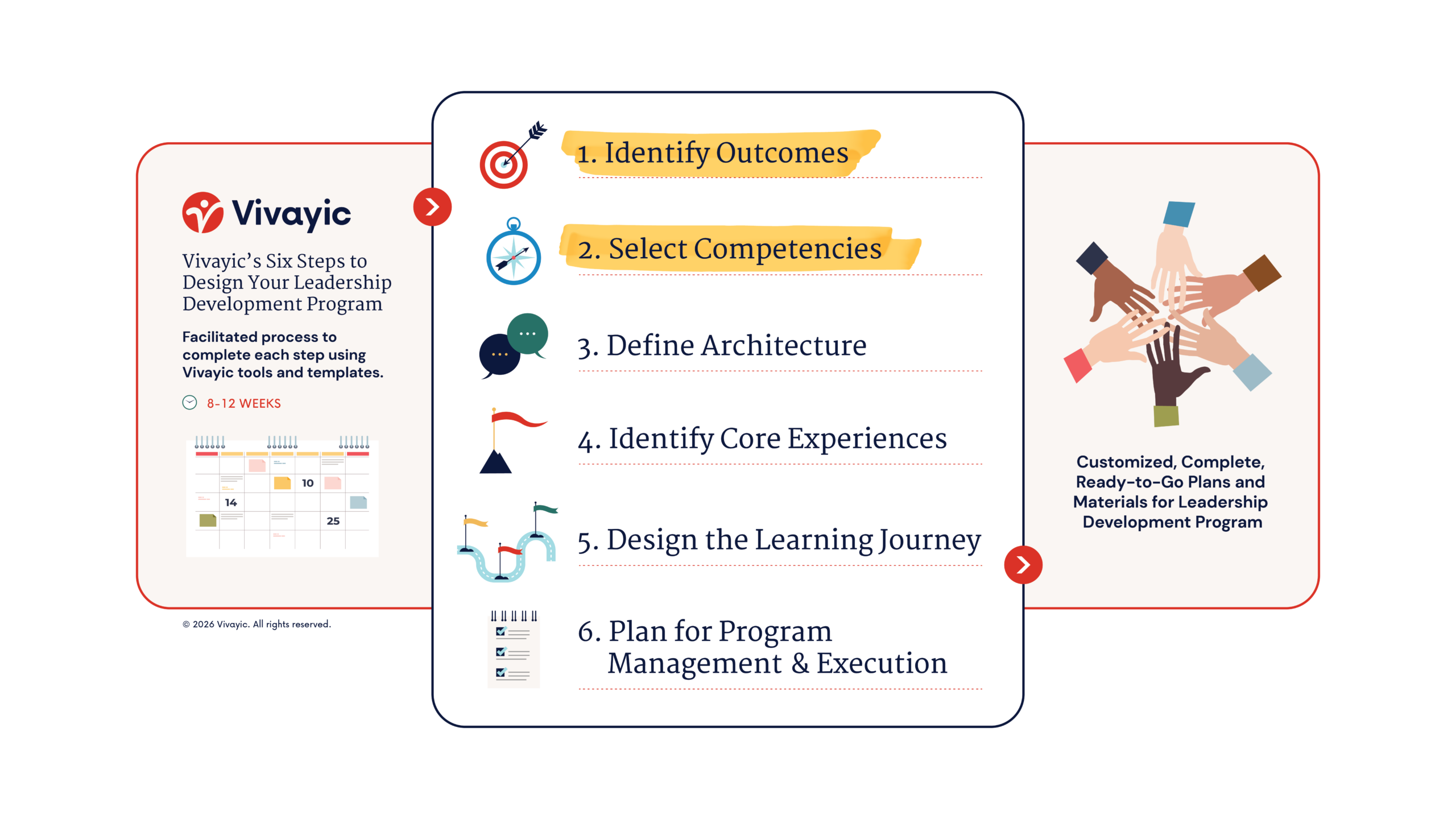
Step 1: Identify Outcomes and Align Around Them
BridgePoint didn’t start by drafting a leadership training agenda.
Instead, they paused to clarify outcomes.
Initially, board members and the senior leadership team offered a range of answers when asked what the leadership program should accomplish:
- Create more consistent leadership practices
- Build a stronger leadership pipeline
- Support managers who were struggling
- Improve retention
- Strengthen relationship with managers and senior leaders
- Identify and invest in high performers
All valid. All important. And collectively — unfocused.
Through structured conversation, BridgePoint’s program sponsors (including board members, senior leaders, and internal champions) worked to define a primary outcome for the program, supported by a small number of secondary outcomes.
This step wasn’t about wordsmithing. It was about alignment.
Sponsors asked:
- What outcome matters most right now given where we are as an organization?
- What must change in leaders’ day-to-day behavior because this program exists?
- How will we know if this program has been successful?
After ranking and discussing a range of possible outcomes, BridgePoint made a deliberate choice.
Primary Outcome:
- Ensure every supervisory role has at least one ready-to-go internal candidate in the succession plan.
Secondary Outcomes:
- Increase board and executive confidence in the organization’s leadership pipeline
- Improve collaboration and communication across programs and teams
This clarity gave the program a clear “north star.” If an activity, topic, or experience didn’t support these outcomes, it didn’t belong in the program.
Step 2: Select Competencies and Make Tradeoffs
With outcomes defined, BridgePoint turned to focus.
Like many organizations, the program design team could have created a long list of leadership topics. Instead, they worked with senior leaders to answer a more disciplined question:
What leadership capabilities are most critical for new managers to achieve the outcomes we’ve defined?
This required tradeoffs.
Rather than attempting to develop every possible leadership skill, they selected five competencies most critical to achieving their outcomes:
- Developing Others
Preparing future leaders requires managers who can coach, mentor, and grow people — not just manage tasks. - Accountability
New leaders must own outcomes, follow through, and model responsibility as they step into broader roles. - Communication
Clear expectations, feedback, and alignment are essential when managing former peers and cross-functional teams. - Managing Conflict
Leadership readiness depends on the ability to address tension directly and constructively, not avoid it. - Living Our Purpose and Values
For a mission-driven nonprofit, leadership readiness is inseparable from values-based decision-making.
Each competency was chosen because it described behaviors new managers would need to demonstrate in order to be considered “ready” for broader leadership responsibility.
What Happens When These Steps Are Skipped
Organizations that skip outcome clarity and competency focus often experience the same frustrations:
- Leadership programs feel generic rather than tailored
- Participants struggle to apply learning in real situations
- Success is difficult to define, measure, or defend
Leadership development becomes something leaders attend, rather than something that changes how they lead.
BridgePoint avoided these pitfalls by doing the harder work upfront — aligning on outcomes and narrowing their focus before designing the experience itself.
Direction Before Design
At this point, BridgePoint still hadn’t selected a delivery format, designed learning experiences, or built a learning journey.
And that was intentional.
Outcomes and competencies don’t deliver leadership development — but they set the direction for it. They ensure that when experiences are designed, they serve a clear purpose.
In the next article, we’ll follow BridgePoint as they use their stated program outcomes and selected competencies to design a leadership development experience grounded in real work, real challenges, and real practice.
Leadership development doesn’t happen by accident. It happens by design — starting with clear outcomes.
Schedule a Discovery Call
Let’s work together to design and deliver a tailored learning experience that helps meet your strategic needs.

Blaze Currie
Practice Lead, Account ManagerBlaze Currie